
Enabling Carbon Farming at The Farm Level: What LILAS4SOILS Farmers Need to Scale Adoption?
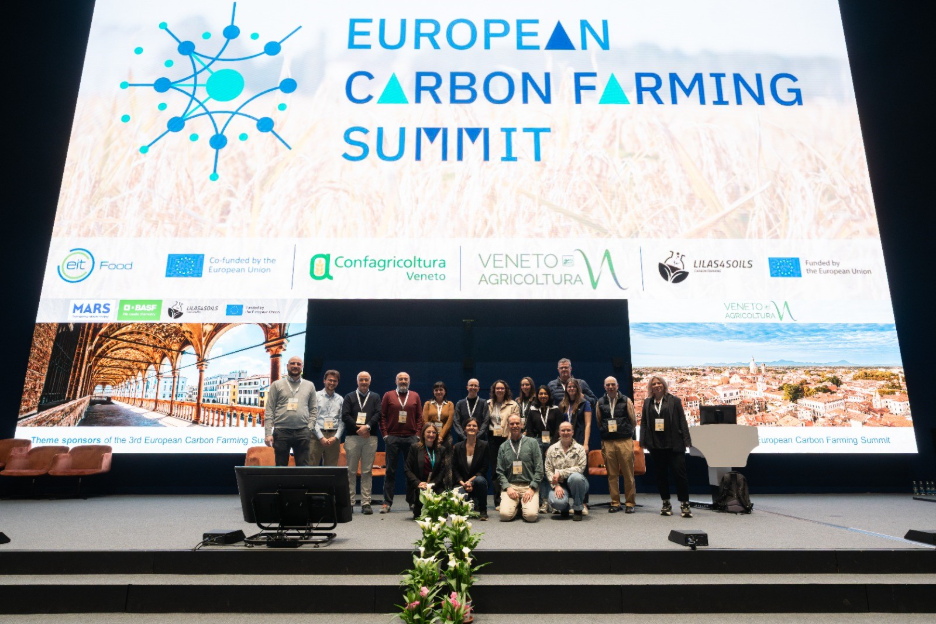
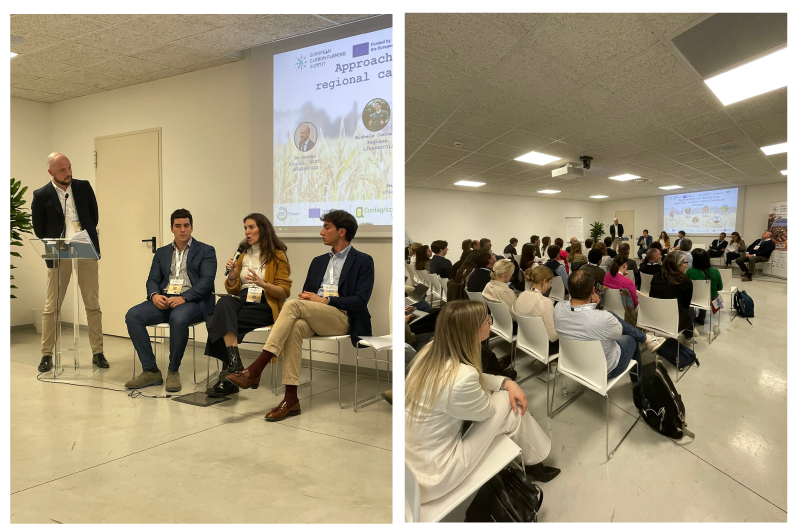
At the European Carbon Farming Summit, 17-19th March, LILAS4SOILS convened a dedicated session, co-organised with #SHARE our Italian Living Lab bringing together three project farmers, a technology provider, and stakeholders from across the agricultural value chain to examine a central question: What conditions are required to enable the uptake of carbon farming at the farm level?

Aligning Carbon Farming with Farm-Level Priorities
A key insight from the session is that carbon farming practices are rarely adopted primarily for their climate mitigation potential.
Farmers emphasised that practices such as reduced tillage, cover crops, organic fertilisation, and biodiversity-enhancing measures are implemented to improve soil health, resilience, and productivity. Climate benefits, including carbon sequestration, are typically perceived as co-benefits rather than primary drivers.
This highlights the importance of aligning carbon farming initiatives with agronomic and economic realities at farm level.
Persistent Barriers to Adoption
Despite increasing awareness and technical progress, several barriers continue to limit wider uptake.
First, knowledge and advisory gaps remain significant. Carbon farming practices often require new skills, long-term experimentation, and access to reliable technical guidance. Without sustained advisory support and opportunities for peer learning, farmers face high perceived risks.
Second, cultural and operational constraints play an important role. Practices such as no-till systems require specialised equipment and a long-term shift in farm management approaches, which can discourage adoption.
Third, measurement, reporting, and verification (MRV) systems remain complex and fragmented. While digital tools have improved data collection, a lack of harmonised standards and interoperability between platforms continues to create uncertainty and administrative burden
Policy and Market Priorities for Scaling Carbon Farming
The session identified three priority areas where targeted action is needed to enable scaling:
1. Strengthening Advisory and Knowledge Systems
Effective adoption depends on access to continuous, practice-oriented support.
Public authorities and agricultural support programmes should invest in long-term advisory services, demonstration farms, and structured farmer-to-farmer knowledge exchange. These systems should prioritise practical implementation, equipment management, and long-term soil health monitoring.
2. Simplifying and Harmonising MRV Frameworks
Credible and accessible MRV systems are essential to build trust and enable participation.
Policy efforts should focus on developing clear and consistent standards, ensuring interoperability between digital tools and certification schemes, and reducing administrative complexity. MRV requirements should be aligned with existing farm management systems to avoid duplicative reporting obligations.
3. Creating Stable Economic Incentives
Long-term adoption depends on the ability of farmers to generate reliable economic returns.
There is a need to develop stable demand for carbon and environmental services through a combination of public incentives, private-sector engagement, and supply chain initiatives. Mechanisms such as long-term contracts and collective approaches can help ensure predictable revenue streams and fair value distribution.
Towards a Coordinated Approach
The discussion highlighted that carbon farming cannot scale without coordinated action across policy frameworks, supply chains, technology providers, and financial actors.
In the absence of such alignment, farmers are likely to face disproportionate risks while the broader system captures the benefits.
Authors: Andrea Fiorini, Paula Esteves.
Revised by: Sonia Pietosi

Funded by the European Union (Grant no. 101157414). Views and opinions expressed are however those of the author(s) only and do not necessarily reflect those of the European Union, European Research Executive Agency (REA). Neither the European Union nor any other granting authority can be held responsible for them.

