
Innovating Soil Carbon Monitoring: LILAS4SOILS Selected 15 MRV Technology Providers
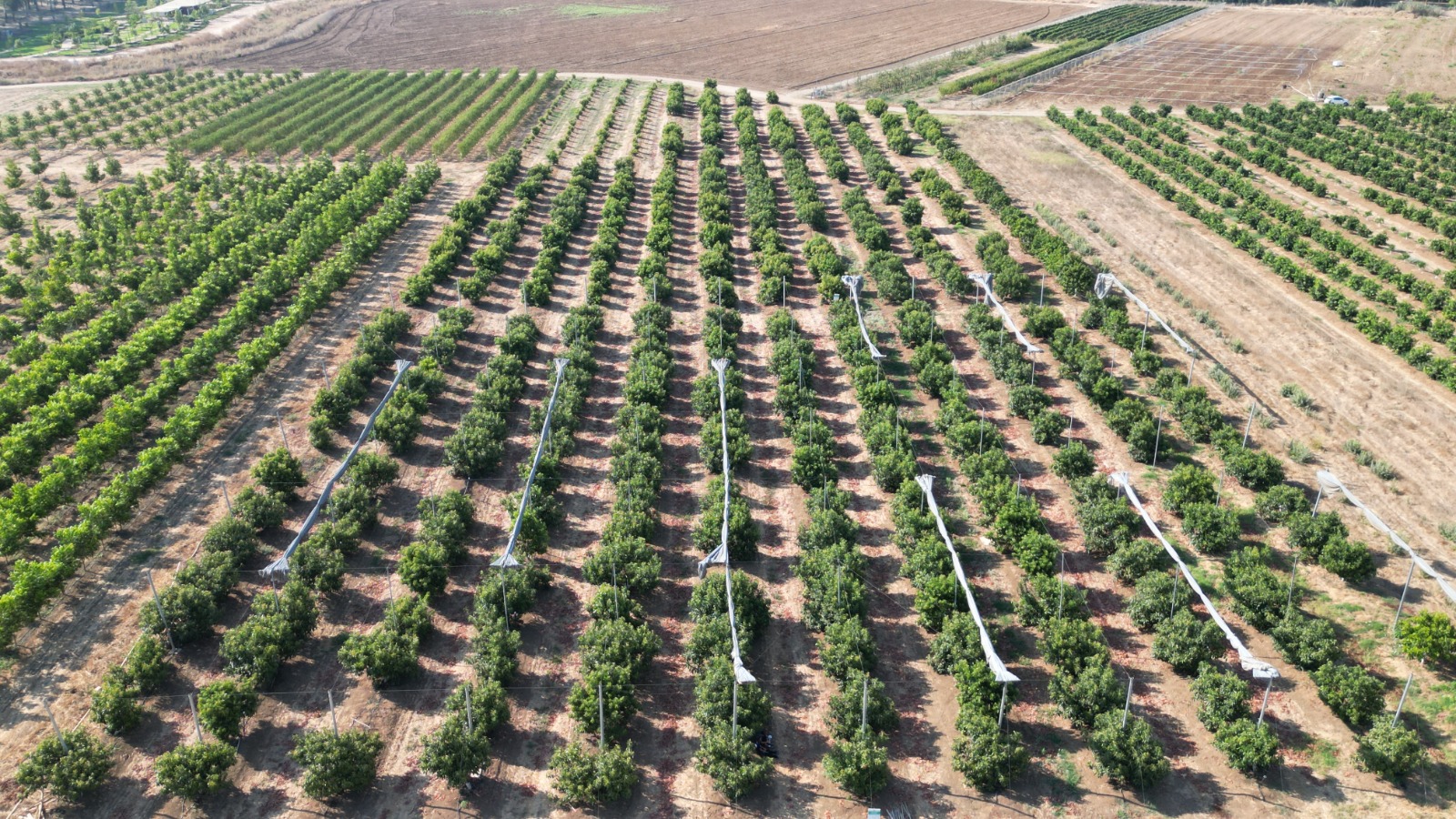
Healthy soils are at the heart of a sustainable food system. Yet measuring the impact of farming practices on soil organic carbon (SOC) remains one of the most technically demanding challenges in the transition to regenerative agriculture. LILAS4SOILS — a Horizon Europe-funded project fostering Carbon Farming Practices (CFPs) through Living Labs across the Mediterranean and Southern Europe — is contributing to tackling this challenge. As part of this effort, EIT Food recently completed an Open Call to identify and select 15 innovative Monitoring, Reporting and Verification (MRV) technologies to be tested across the project's farm network.
Why an MRV Open Call?
LILAS4SOILS is already measuring SOC stocks using conventional soil sampling. The baseline results will be available in mid-2026, and new soil measurements will be taken in 2027 and 2028. However, conventional sampling is costly, time-consuming, and spatially limited.
The MRV Open Call was designed to complement this conventional approach by identifying innovative technologies that can reduce sampling costs, improve the accuracy and spatial resolution of SOC estimates, and contribute to a more standardised and scalable MRV framework — one that could ultimately support the credibility of carbon farming certification under the EU Carbon Removals and Carbon Farming (CRCF) Regulation. Selected providers will test their solutions alongside the project's conventional sampling results, allowing for comparison and validation in real farm conditions.
The Selection Process
The call was launched in November 2025 and attracted 29 eligible applications. Candidates were selected based on their technical excellence, including the scientific rigour of the proposed solution and the alignment with LILAS4SOILS and EU CRCF methodology; technical feasibility of their testing and validation plans; and potential impact, including innovation potential, cost reduction and usability, as well as opportunities for scalability and replicability. A balanced geographical distribution across all five LILAS4SOILS Living Labs was also considered in the selection.
The Selected Solutions
The 15 selected providers offer a diverse and complementary portfolio of technologies, spanning the full MRV chain from direct field measurement to satellite-based modelling and farmer-facing digital tools. They can be grouped into five categories:
1. Direct and Proximal Sensing
Tools that measure or densify SOC observations directly in the field or laboratory, reducing dependence on conventional dry combustion analysis:
- UPTOFARM (Italy/SHARE) — Portable near-infrared (NIR) spectroscopy for in-field SOC estimation
- CETENMA (Spain/IBERSOILL) — Fourier-Transform mid-infrared spectroscopy (FTIR) for non-destructive and cost-efficient SOC analysis

2. Remote Sensing and Digital Soil Mapping
Solutions using satellite imagery, drone data or spectral remote sensing to estimate SOC and related indicators at scale:
- Downforce Technologies (Spain/IBERSOILL) — EO-based SOC stock change mapping using Sentinel-1/2 and machine learning
- TierraSpec (Israel/RAGILL) — AI-driven digital soil mapping from bare-soil satellite spectral windows
- CO2 Angels (France/SOFRALL) — Digital soil mapping combining EO time series, spectroscopy and ML
3. Hybrid MRV Systems
Approaches that integrate field data, Earth observation, sensors and process-based or data-driven modelling:
- Tradebox Media (Spain/IBERSOILL) — Multimodal MRV integrating sensors, remote sensing and AI for SOC and carbon dynamics
- VirtuaCrop (Portugal/IBERSOILL) — Hybrid approach combining EO and smartphone soil photography with ML models
- farmB – Digital Agriculture (Greece/GRECFL2) — End-to-end framework integrating EO, proximal sensing and spatial modelling
- MEEO (Italy/SHARE) — RothC-based SOC modelling combined with Random Forest biomass estimation from EO
- AIGROW (Greece/GRECFL2) — Hybrid MRV with automated data ingestion and voice-based farmer input
4. Carbon Input and Biomass Estimation
Tools focused on estimating cover crop biomass, carbon inputs and vegetation proxies as inputs for SOC modelling:
- RAGT SEMENCES (France/SOFRALL) — Satellite-Based cover-crop management and MRV reporting (Biomass, N capted, N released)
- MyEasyFarm (France/SOFRALL) — Satellite-based MRV platform with a dedicated cover crop biomass estimation module
- Hellenic Drones (Greece/GRECFL2) — Multispectral drone and Sentinel-2 for high-resolution biomass proxies
5. Digital Modelling and Platform-Based Approaches
Solutions relying on AI, digital twins, geostatistics or workflow platforms to simulate SOC dynamics and support data integration:
- Lost Glacier/PlantVillage (PACHA) (France/SOFRALL) — Public-good MRV with an offline-first AI agronomist, using satellites to track regenerative practices and support climate adaptation, pest control and carbon payments.
- Fluffy Systems GmbH (France/SOFRALL) — AI-assisted digital sandbox for soil carbon modelling, allowing users to create workflows in natural language and easily run, calculate and visualise simulations such as RothC
What Comes Next
All 15 providers have now signed their agreements with LILAS4SOILS and been introduced to their respective Living Lab Leaders. Initial meetings have taken place to define co-creation activities, agree on testing protocols and identify the farms and farmers to be involved.
The data collected through these innovative technologies will be compared with LILAS4SOILS' conventional SOC sampling results and process-based ARMOSA model outputs, creating a unique, multi-method evidence base on the performance of next-generation MRV tools under real Mediterranean farming conditions.
Want to follow how these technologies perform across our farm network?
Follow our socials @Lilas4Soils: https://www.linkedin.com/company/105109017/admin/page-posts/published/
Edited by Paula Esteves, Comms and Dissemination Coordinator

Funded by the European Union (Grant no. 101157414). Views and opinions expressed are however those of the author(s) only and do not necessarily reflect those of the European Union, European Research Executive Agency (REA). Neither the European Union nor any other granting authority can be held responsible for them.

