
LILAS4SOILS’ Recommendations for Scaling Carbon Farming
LILAS4SOILS Conclusions from the 2026, European Carbon Farming Summit
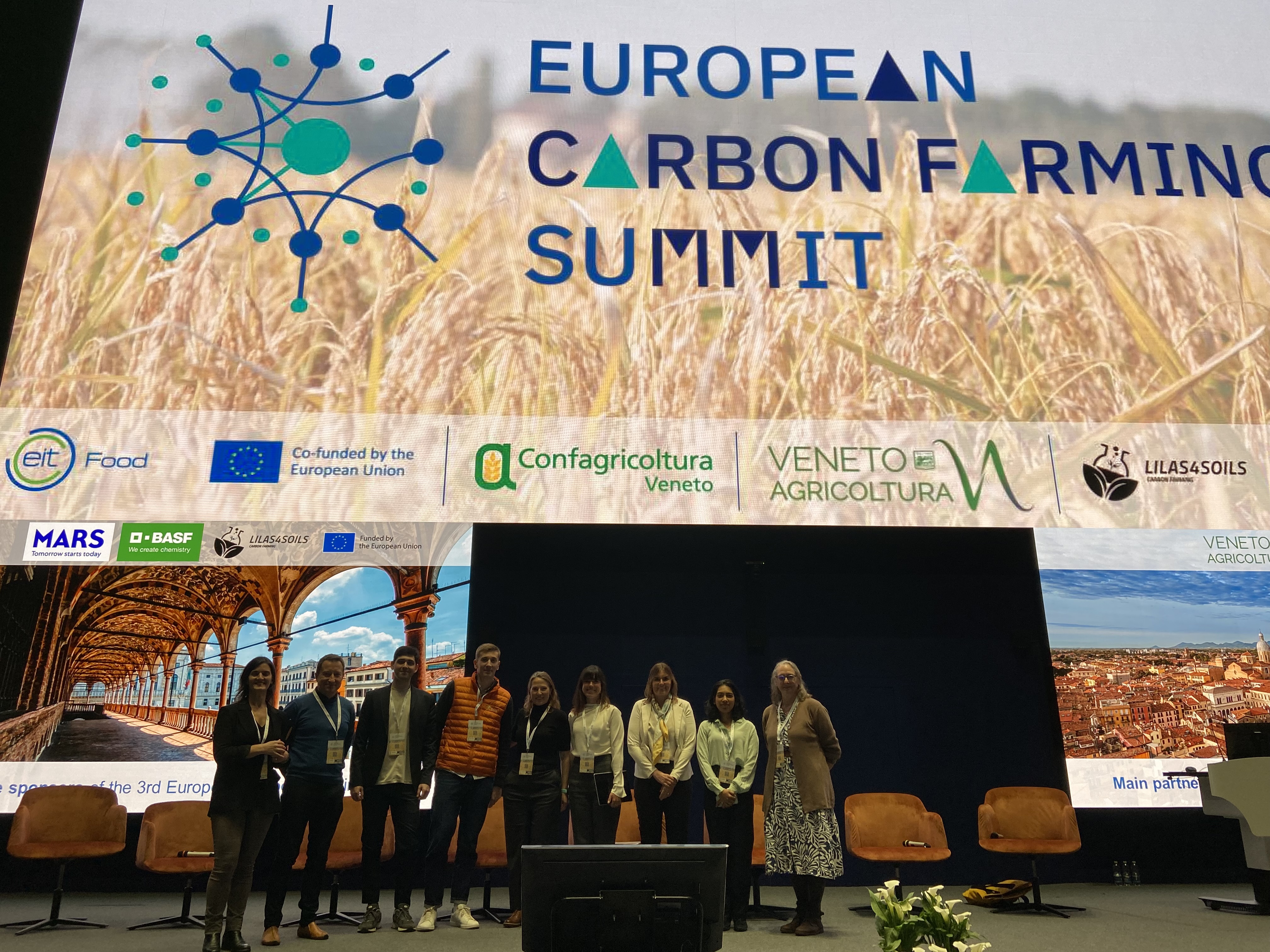
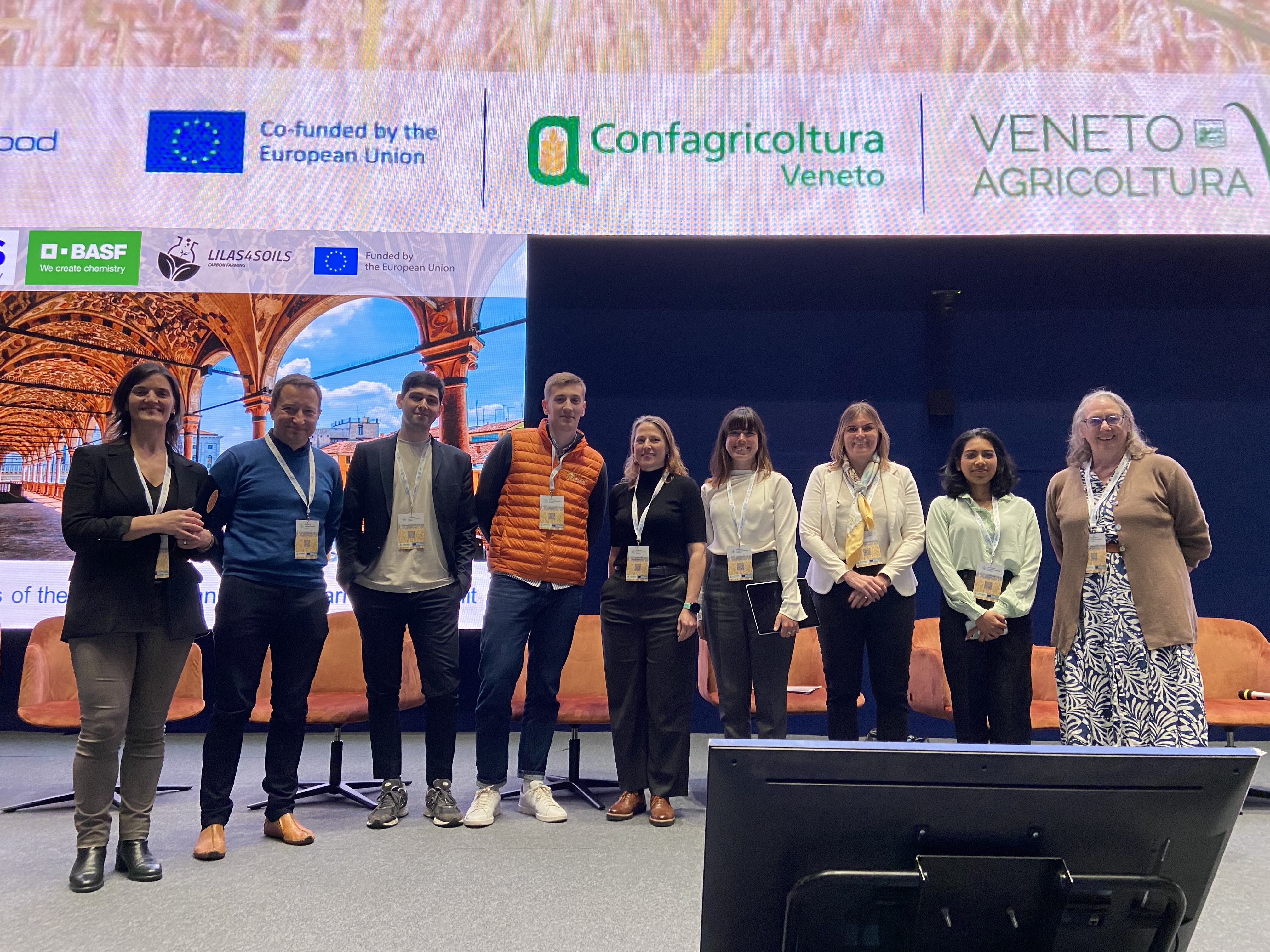
Earlier this year, LILAS4SOILS presented at the European Carbon Farming Summit (ECFS26), joining farmers, advisors, technology providers, and policymakers for a session on one deceptively simple question: what does it actually take for carbon farming to work, on the ground, for the people implementing it?
Drawing on that discussion and on our own experience across five Living Labs, LILAS4SOILS is issuing three recommendations to carry this conversation from the summit floor to the policy table. Together, they make one thing clear: scaling carbon farming is less about carbon, and more about people, trust, and practical support.

Recommendation 1: Strengthen Farmer-Centred Advisory and Peer-Learning Systems
Practices like no-till, cover cropping, or organic fertilisation with digestate require new skills, new equipment, and the confidence to experiment over several seasons before results show. Without peer learning, demonstration farms, and long-term advisory support, that risk feels too high for many farmers to take on alone — a concern echoed strongly by both early adopters and long-time practitioners at ECFS26.
LILAS4SOILS recommends that public authorities and agricultural support programmes invest in long-term advisory services, demonstration farms, and farmer-to-farmer knowledge exchange — going beyond one-off project training, and paying particular attention to young farmers and new adopters.
Recommendation 2: Simplify and Harmonise MRV Systems
Monitoring, Reporting, and Verification (MRV) came up at ECFS26 as both a strength and a sticking point. Digital tools and data availability have improved significantly, but fragmentation between platforms and unclear standards still create uncertainty and slow investment.
LILAS4SOILS recommends harmonising MRV standards and definitions across the EU, and ensuring digital tools integrate with farmers’ existing workflows rather than adding new reporting burdens on top.
Recommendation 3: Build Stable Demand and Fair Value-Sharing Mechanisms
Carbon farming will only scale if farmers can capture a fair share of the value it creates. Right now, many of the benefits remain indirect or uncertain, and no single farmer can capture that value without coordinated action across supply chains and markets.
LILAS4SOILS recommends developing stable demand and value-sharing mechanisms — long-term contracts, buyer commitments, and collective schemes — that ensure farmers receive a fair share of the value generated by carbon and sustainability claims.
.png)
Why LILAS4SOILS Is Making This Call
These three recommendations are not abstract policy positions as they reflect exactly what our Living Labs are designed to test in practice. Across IBERSOILL, SOFRALL, SHARE, GRECFL², and RAGILL, 5 living labs in 2 continents, we work directly with farmers to understand what support structures actually help, and we feed that evidence back into the policy conversation.
The European Carbon Farming Summit in 2026 reinforced something we already believe: carbon farming isn’t just a climate tool, it’s a resilience strategy first for soil, for farms, and for the people who work them. Climate benefits follow as a welcome co-benefit, not the starting point. Our recommendations, and the way we communicate about carbon farming, are built on that reality.
Want to follow our Living Labs as they put these recommendations into practice? Get to know their work and their websites: https://www.lilas4soils.eu/living-labs
Edited by Paula Esteves, Comms and Dissemination Coordinator

Funded by the European Union (Grant no. 101157414). Views and opinions expressed are however those of the author(s) only and do not necessarily reflect those of the European Union, European Research Executive Agency (REA). Neither the European Union nor any other granting authority can be held responsible for them.

