
Real Idanha: From a Fragile Heritage To a Resilient Future
Idanha-a-Velha, a small village nestled between the Pônsul River and Monsanto hill, was founded by the Romans in the 1st century BC and is one of the twelve Historical Villages of Portugal. The landscape around Idanha-a-Velha is characterized by a vast rural plain in the Beira Baixa region, marked by cork oak and holm oak agrosilvopastoral systems mixed with pasture areas. The region stands out for its Mediterranean climate with continental influence, characterized by hot and dry summers and mild but humid winters, registering an annual precipitation of 665 mm. The soil in the region varies between fertile in agricultural plains to less productive terrains in the nearby mountain ranges, where schist and granite predominate, rendering them unsuitable for agriculture.
Despite these constraints, olive groves are widespread throughout the region, fitting right into organic systems thanks to the good soil and appropriate climate. However, intensive olive orchards have started to influence the market, putting pressure on price levels. This, coupled with the decline and aging of the rural population and climate change, is leading to a decrease in traditional rainfed olive grove systems.
In 2016, Tiago Lourenço and Ricardo Araújo - who had lived all their lives in the big city - decided to move to the Beira Baixa region and start a new project, the Real Idanha company, on a 180-ha farm in Idanha-a-Velha. The farm is situated in this unique spot with a richlandscape and cultural heritage, and they feel a real responsibility to preserve it. Their urban context and contemporary mindset led them to adopt a more regenerative way of working: no soil tilling, animals as their farm workers, and valuing local olive varieties like Galega, Bical, and Cordovil. The combination of these endemic varieties and the innovative method (olive collection earlier than usual, mechanical and cold transformation in 24h) results in a premium organic olive oil called Egitânia. A turning point for the farmers came with their recognition of the symbiotic relationship between the olive orchards and their livestock, particularly the local Merino breed, known for its rusticity and resilience. This integration plays a crucial role both economically and ecologically.
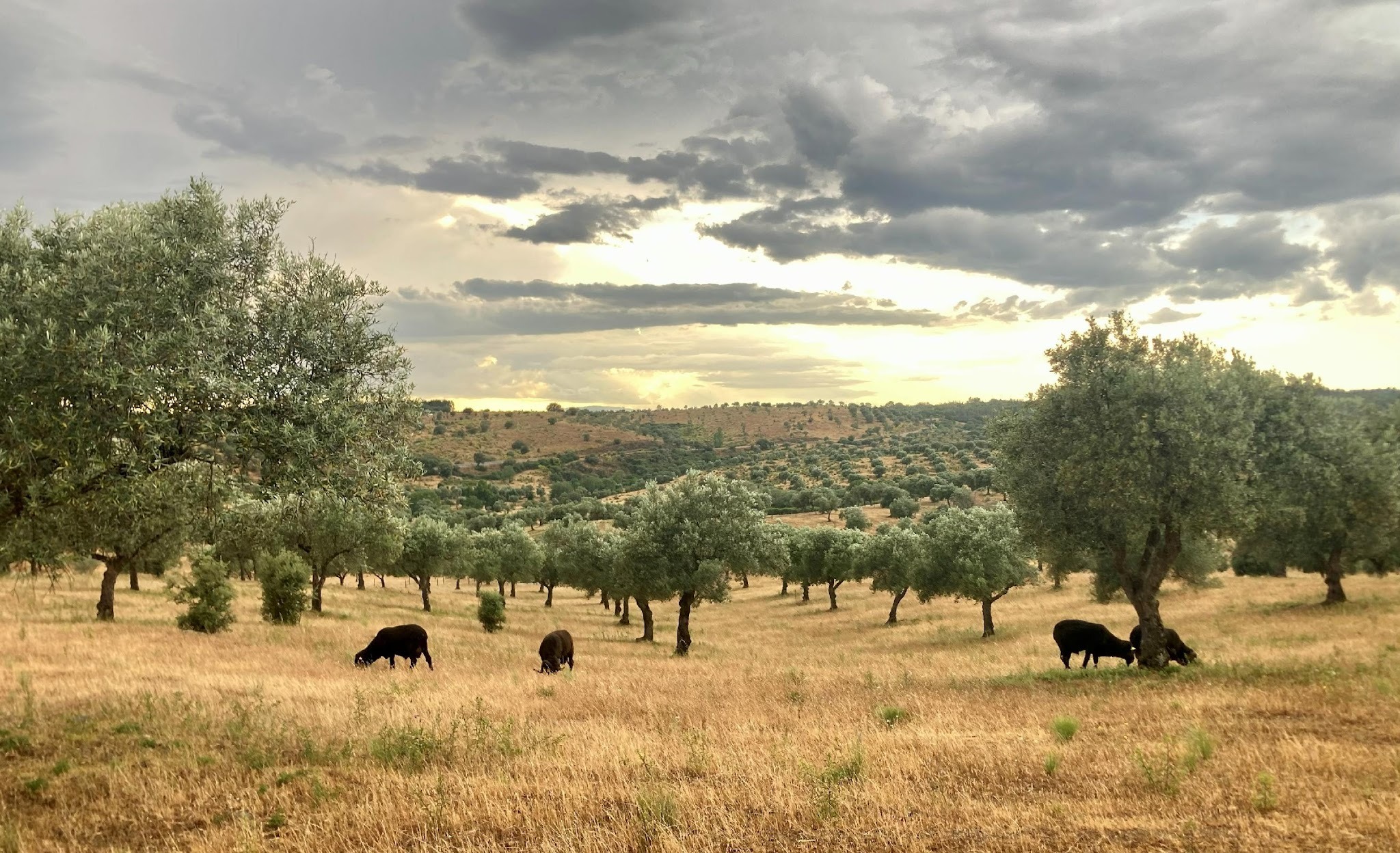
That was what got them interested in the LILAS4SOILS project, especially the IBERSOILL living lab: they were already into how their 9000 olive trees sequester carbon, along with biomass scraps and animal manure that boost soil organic matter. Tiago and Ricardo strongly believe that this contributes to mitigate climate change and allows water retention in rainfed agriculture and in areas with recurrent summer drought periods such as this one, so they are really interested in measuring and understanding the role of carbon. The main implementation on this farm, during the project LILAS4SOILS, is the plantation of more than 25 different autochthonous trees and shrubs species in which the wool is having an important role. The goals are the complexification of systems and a move away from monoculture, reinforcement of biodiversity and carbon sequestration capacity, and increased shaded areas on the farm to create milder climates. Another main goal is to study the role of sheep, developing holistic grazing inside the olive orchard.
.png)
As main challenges in their activity, Tiago and Ricardo describe the few economic resources not only in acquiring equipment, but also to develop innovative experimental research and participating in projects. Other barriers are the current policies that are focused on promoting monocultures and are not adequate for increasing biodiversity. The excessive bureaucracy and outdated views on agricultural productivity are also factors that delay the improvement and the activity. Finally, regarding animal production, farmers are facing several problems with animal spread epidemics (such as bluetongue), wild animal attacks, and climate changes that affect all systems.

Funded by the European Union (Grant no. 101157414). Views and opinions expressed are however those of the author(s) only and do not necessarily reflect those of the European Union, European Research Executive Agency (REA). Neither the European Union nor any other granting authority can be held responsible for them.

